
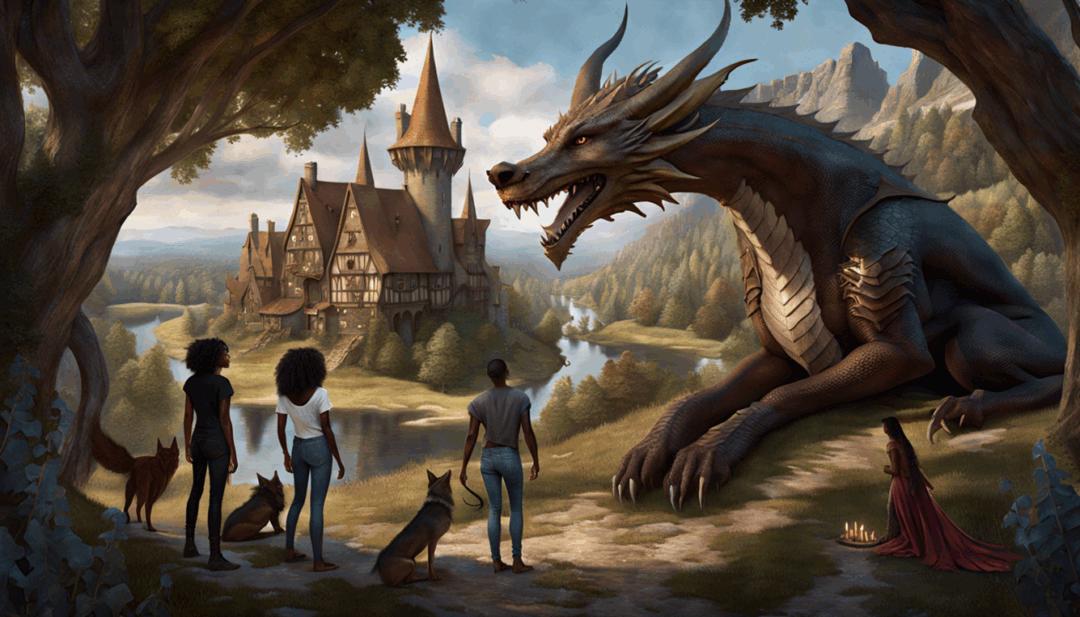
My own journey with myth and fairytale began, as it does for many children, in the early folds of imagination; transported by stories to magical lands inhabited by witches and wolves, heroines and helpers, enchanted forests and impossible tasks. These stories were more than entertainment for me; they were lifelines, rich with metaphoric nourishment in the midst of very under-nourishing familial and social environments. Perhaps because of this nourishment I received from stories as a child, I never quite grew out of my fascination with fantasy. In fact, my relationship with myth and story deepened over time as the archetypal landscapes became maps for my own inner healing and growth.
As my integration deepened, so did my professional calling. I had intuitively been applying story and creative expression in my leadership and organisational development roles for over two decades. In 2016, I decided to complete a Master’s degree in expressive arts and mental health, and in addition I have since immersed myself in a number of deep learning programmes to integrate the wisdoms that connect story and arts-based approaches, with individual and systemic health; something first nations all over the world knew before the colonial takeover.
Myth and story I discovered, are not only a personal balm — they are indeed powerful tools for collective insight and transformation.
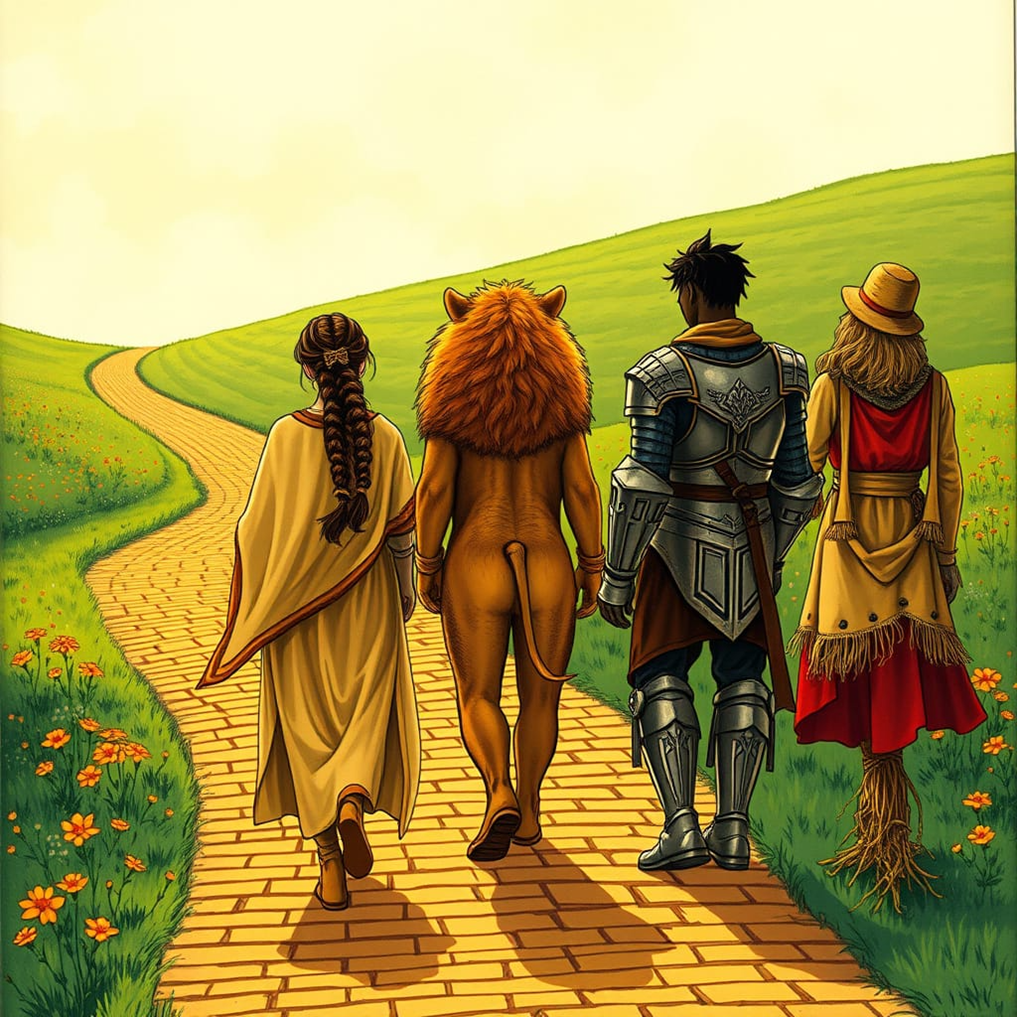
Carl Jung proposed that the psyche—the sum of all conscious and unconscious processes—is not solely shaped by personal experience. Rather, it is interwoven with universal, inherited patterns of human existence that shape our thoughts and behaviors. He called these patterns archetypes. This was not a new idea. Eastern traditions had long spoken of fields of pre-existing patterns that inform and influence our physical and psychological worlds. Wisdom traditions the world over are steeped in storytelling; passed down for millennia, myths, folktales and fairytales, are containers of these archetypal patterns. They are living maps of the multitude that is our human experience. They are expressions of the collective unconscious—collective patterns that guide our inner lives and help us orient in the outer world.
Jungian psychologist Marie-Louise von Franz described fairytales as the “anatomy of the psyche”; patterns of life experience including symbolic characters (inner and outer), challenges, resolutions, and transformations, that unfold under specific conditions.
Through these stories, we find meaning, explore new ways of being, and navigate life’s transitions. The psychologist Rollo May described archetypes in myths and tales as narrative patterns that help us access different facets of identity, including values, beauty, meaning, behaviours, and social responsibilities.
Yet, in a world dominated by rationalism, we have dismissed myths and fairytales as mere childhood entertainment, failing to see their deeper psychological and cultural significance.
These archetypes and patterns live within us, and they also shape the systems we inhabit. In leadership and organisational work, I’ve found that myths can reveal the deeper stories beneath surface behaviours: the unseen dynamics of power, fear, potential, and purpose, that animate a team or culture.
In workshops and group processes, I might introduce a fairytale or myth as a mirror to reflect or enquire into what’s playing out in the system. Are we stuck in a Sleeping Beauty trance, waiting for someone to save us? Are we caught in the tyranny of a wicked queen, a perfectionist culture that suppresses authentic voice? Is a tyrant king culture enabling workplace bullying to go unhindered? Are we at the threshold of a hero’s journey, needing to cross into the unknown?
These metaphors open up space for self-awareness, creative imagination, deeper listening, and strengthened connection with others — especially in environments that tend to privilege rationality, efficiency, and linear thinking.
Of course, I’ve encountered resistance. You probably have too. That voice that says: “This is nonsense. We need logic, action, a clear plan.” That voice lives in organisations, and in us. I’ve come to see it not as an enemy, but as a symptom of the overdeveloped rational mind — what some Eastern traditions might call a yang imbalance. May wrote that myth is essential because it gives us a sense of meaning and place in the universe; without it, we are vulnerable to fragmentation and despair. Neuroscience supports this, showing that storytelling activates regions of the brain associated with empathy, integration, and coherence.[1] Our brains are wired for narrative. Stories stitch together disparate experiences and help us find order in chaos.
In African Indigenous traditions, stories have been used as moral, social and spiritual teaching aids for centuries. Myth is not separate from daily life; it is how wisdom is passed on, how healing is invoked, and how the sacred is remembered. This is true also for Eastern traditions. The Ramayana, for example, is not simply an epic about duty and devotion—it is a psycho-spiritual map that guides the human through exile and return, loss and liberation. A tale is not just a sequence of events—it is a map connected to the collective fields of humanity, and that awakens deep knowing in the listener.
As leaders, coaches, facilitators, and psychotherapists, we are invited to engage this remembering—not only for our clients and systems, but for ourselves. The parts of us that were exiled in childhood often hold the gold. In my case, retrieving this part connected me with my deepest creativity, my joy, my capacity for wonder. Reconnecting with these aspects have made me a more compassionate practitioner and a more generative leader.
In organisations, I have seen how story can restore vitality, cohesion, and meaning. When teams begin to see their collective challenges as part of a larger narrative—when they locate themselves in a story field, something opens in the system. Suddenly, the impossible becomes possible. Stuckness gives way to movement. The team becomes not just a group of individuals with tasks, but a living system with a shared meaning and purpose. It invites us to ask not only, “What are we doing?” but more importantly, “what story are we living? and what story wants to emerge?”
[1] (Zak PJ. Why inspiring stories make us react: the neuroscience of narrative. Cerebrum. 2015 Feb 2;2015:2. PMID: 26034526; PMCID: PMC4445577)
Ultimately, myth and story are not a luxury or escape—they are essential technologies of guidance, healing and transformation. They allow us to bridge the inner and outer, the individual and collective, the personal wound and the world’s needs. They remind us that we are not alone, that our struggles have been walked before, and that within us lies the potential for meaningful and sustained change.
As I continue to work with leaders and organisational communities, I carry with me the stories that once carried me. They are no longer just stories—they are companions, teachers, and tools. They remind me, always, that healing is not about fixing what is broken, but remembering what is whole.
Copyright© Vasintha Pather. All Rights Reserved. Please cite the author if you reference any part of this article.
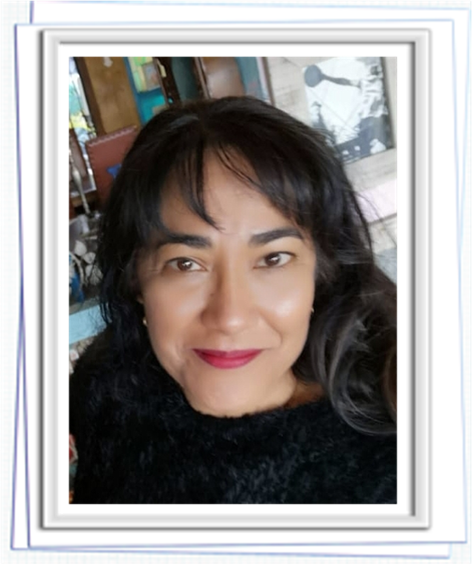
Vasintha Pather is founder of the Centre for Gestalt Leadership, an Expressive Arts Therapist and a systemic leadership coach. Her personal journey inspired her to explore how organisational environments and creative expression influence individual and systemic effectiveness.
Through the Centre for Gestalt Leadership, with associates, she partners with leaders to transform trauma dynamics, amplify strengths, and cultivate innovation in organisational systems. As a coach and psychotherapist, Vasintha has special interest in supporting leaders to restore wellbeing and creative capacity following experiences of developmental trauma and/or systemic trauma relating to race, gender and/or organisations.
Recent Comments