
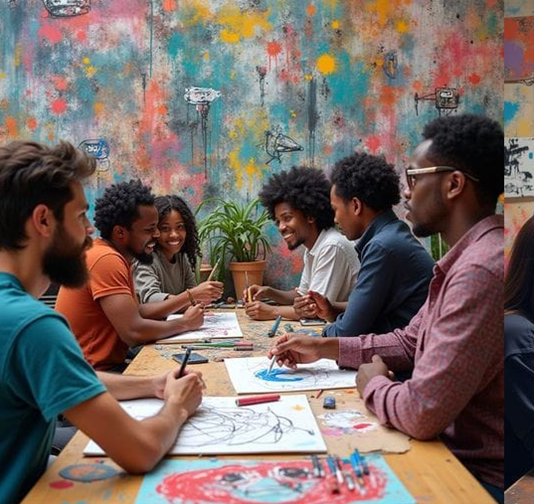
In the old Arthurian legend of Parsifal and the Fisher King, a young knight stumbles upon a wounded king, whose kingdom has withered into a wasteland, fishing in a lake. The Fisher King suffers from a wound that will not heal, and his once-thriving land mirrors his own unending pain, barren and joyless. The castle walls echo with forgotten songs, and the streams run dry. Parsifal’s task is to heal the king and, in doing so, restore life to the land. Yet, the boy fails at first. He is silent when he should have spoken. He does not ask the essential question: “What ails you, my lord?” He rides away, unaware that his failure to bear witness to the king’s suffering will extend the king’s suffering for years to come.
The Wounded System
Today, many of our organisations bear disturbing resemblance to the Fisher King’s realm. I’ve been deeply disturbed since hearing Discovery Health’s recent report that suicide is now the leading cause of unnatural death among people over 55 in South Africa. Add to that the World Health Organisation’s statistic that more than 720,000 people take their own lives globally each year — with suicide being the third leading cause of death among 15–29 year-olds. Nearly three-quarters of these deaths occur in low- and middle-income countries like ours. This should sound a national alarm.
These are not just statistics. These are our colleagues, our leaders, our family members, our friends. And increasingly, the workplace is part of the problem. In my practices as a psychotherapist as well as leadership development coach, I am witnessing a growing tide of people struggling under the emotional pain of workplace bullying, toxic leadership, racism, and cultures that lack connection whilst often being relentlessly pressurised. This week on Talk Radio 702’s Clement Manyathela show, the guest speaker spoke about the weaponisation of mental health at work. I feel bewildered.
Burnout, despair, and disconnection are not personal shortcomings. They are often systemic symptoms — signals that something is deeply wrong in how we lead, relate, and structure our organisations. When leadership is severed from relationship and empathy, when cultures are driven solely by performance without care, we create environments in which people cannot thrive. Worse still, we create environments in which people cannot survive. Cumulative stress – often multi-contextual – unresolved trauma, and disconnected cultures can permeate entire organisational ecosystems, affecting behaviours, relationships, and outcomes in ways that diminish wellbeing and effectiveness.

Asking the Right Question
Parsifal’s initial failure to ask the right question—”What ails you?”—is a potent metaphor for our current leadership crisis. Too often, we mistake symptoms for the core wound. We address surface-level burnout with wellness strategies that are not sustained or culturally embedded. We then fail to address the deeper disconnection, unresolved trauma, and systemic dysfunction that generate these crises. Like the young knight, we ride through the wasteland without pausing to ask the question that might change everything.
It’s time for a radical shift in how we lead, how we listen, and how we respond. It’s also time for a radical shift in addressing—rather than suppressing—our own psychological wellbeing as leaders. The outdated mindset that emotional and mental health are ‘soft skills’ can be deadly. The term ‘soft’ has long implied less important or weak, and for decades, perhaps centuries, we’ve built organisational systems obsessed with the bottom line and shareholder value, while sidelining the human beings who deliver on them. The truth is, emotional maturity, psychological safety, and relational wellbeing are not peripheral—they are foundational to sustainable performance, innovation, and resilience. They are also core to our humanity.
A Call for Leadership Development that is Trauma-Informed, Arts-Based, and Relational
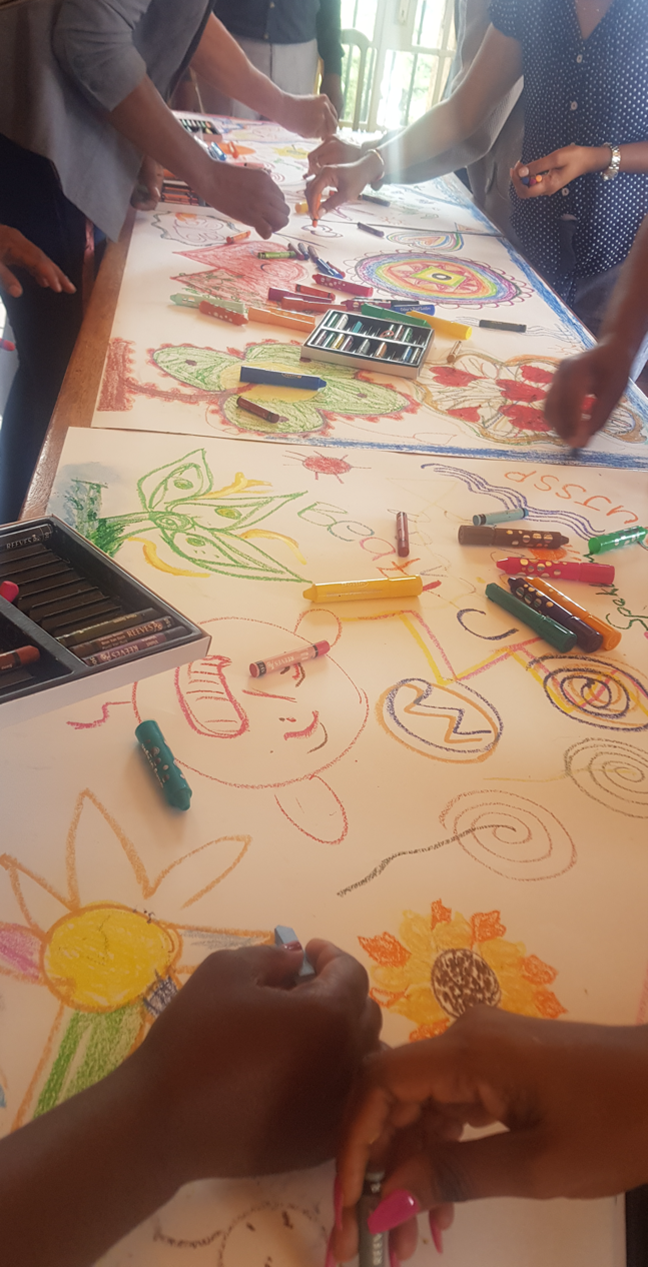
My own journey of recovering from traumatic life experiences as a leader, has taught me that creativity is not a luxury—it is a survival resource and a powerful technology for transformation. Over the years, I’ve designed and led workshops ranging from strategic planning to team strengthening and culture transformation, to change leadership, to addressing imposter syndrome—each rooted in trauma-informed principles, arts-based practices, and leadership science. I have rarely met anyone who found the impact unremarkable, even when it’s taken some time for them to shift their attitude. When people are invited into creative processes with care and integrity, something meaningful almost always happens.
The Centre for Gestalt Leadership advocates for a collective, developmental approach that fosters creativity, play, and performance as tools for organisational learning and transformation. Neuroscience confirms that creative processes—including music, movement, storytelling, and visual arts—activate different regions of the brain, supporting emotional regulation, relational connection, and meaning-making. Creativity awakens the parts of us that traumatic stress can suppress. It becomes a doorway through which complex emotions can be expressed, metabolised, and reimagined.
Collective creativity and relational development can have a profound effect on organisational health.
Healing the Wasteland
Too often, we ask leaders to guide others while running on empty themselves. Leadership is an inherently relational and psychological task—it requires inner resilience, self-awareness, and a deep capacity to sit with discomfort. Without personal integration, leaders risk becoming reactive, emotionally disconnected, bullying, or rigid—amplifying trauma in the system rather than transforming it.
By embracing new and collective approaches, organisations can create environments that not only acknowledge the systemic nature of burnout and trauma but also actively engage people in co-creating cultures of connection, innovation, and resilience. This shift from a pathology-focused model to a developmental, collaborative framework can be pivotal in addressing the root causes of workplace distress and fostering sustainable well-being.
We must ask: what kind of environments are we cultivating? What unspoken burdens do our colleagues carry? Do our systems allow space for rest, reflection, or creativity? Are we inviting the whole human into our organisational life?
We need sustained, systemic interventions that are inherently collective and that include:
- Training leaders in trauma-informed principles and practices.
- Employing creativity-based tools that have a developmental impact, meaning they generate something positive and additive for teams.
- Embedding mental health literacy across the organisation.
- Integrating reflective spaces to metabolise change, challenges, and complexity.
- Supporting leaders to process their own unhealed trauma and stress.
- Enabling relational strength in teams ongoingly and creating spaces that inspire imagination.
If we want innovation, we must restore imagination. If we want resilience, we must recognise the trauma we are located in the midst of as a nation. If we want high-performing teams, we must prioritise psychological safety and creative aliveness.
My love for organisational systems is rooted in the possibility that organisations are spaces of social restoration and positive change. Organisations have a profound opportunity—and responsibility – to steward societal change, not through performative wellness strategies, but through trauma-informed, strengths-oriented, and creativity-based practices that reach into and elevate the heart of our shared humanity; whilst making a great profit!

The Centre for Gestalt Leadership is interested in enabling healthy, vital organisational systems. Our desire is to equip leaders and functional teams with awareness and a range of tools, skills and practices that together contribute to shaping organisational environments that produce wellness. Here are a few of our offerings; please contact me for an exploratory conversation and/or join our free creativity labs to get a feel for some of the inspiration.
- Re-Storying Self: An expressive arts-based workshop for leaders to enrich personal narratives and strengthen vitality, purpose, and presence.
- Systemic Constellations for Teams: Systemic mapping to reveal hidden dynamics, unresolved histories, and potential pathways for generative outcomes.
- Trauma-Informed Leadership Lab: A deep dive into how trauma manifests in teams and systems, and how to lead with empathy, clarity, and courage.
- The Creative Organisation: Exploring organisational culture change through myth, metaphor, and archetype to reimagine what’s possible.
- Creative Renewal for Burnout Recovery: A somatic and arts-based offering to equip leaders and teams with tools to cope with emotional depletion and fatigue.
- Creative Design Labs: Design support to help leaders and practitioners design workshops and processes that enable team connectedness, more energised commitment, and psychological safety.
Article Copyright© Vasintha Pather. All rights reserved. Please cite the author if you use any of the content.
About the author:

Vasintha Pather is founder of the Centre for Gestalt Leadership, an Expressive Arts Therapist and a systemic leadership coach. Her personal journey inspired her to explore how organisational environments and creative expression influence individual and systemic effectiveness.
Through the Centre for Gestalt Leadership, with associates, she partners with leaders to transform trauma dynamics, amplify strengths, and cultivate innovation in organisational systems. As a coach and psychotherapist, Vasintha has special interest in supporting leaders to restore wellbeing and creative capacity following experiences of developmental trauma and/or systemic trauma relating to race, gender and/or organisations.
Recent Comments